



During the visit, meetings were held with professors from the Department of Archaeology at Kemerovo State University, as well as with specialists from the Museum of Archaeology, Ethnology, and Ecology of Siberia at Kemerovo State University – leading archaeologists of the Kemerovo region.
The museum’s scientific archive contains more than 900 volumes, including reports of archaeological expeditions conducted by the university’s staff since the 1960s, drawings and photographs of archaeological sites, monument passports, archaeologists’ field diaries, minutes of departmental meetings, and other materials.
As it was impossible to review the entire archive during the trip, materials from Kemerovo State University’s petroglyphic expeditions of various years were selected for analysis. These materials reflect the results of field research carried out in the regions of the Sayan-Altai, Central Asia, and the Northern Tien Shan.
The museum’s scientific archive has accumulated a unique corpus of data on petroglyphs from these regions. These collections make it possible to trace regional features of artistic techniques and iconography and to identify common characteristics of the worldview and symbolic thinking of ancient communities. The obtained information is of particular scientific value for comparative analysis with the petroglyph complexes of Eastern Kazakhstan.
The business trip continued in Barnaul, at the Department of Archaeology and the Museum of Archaeology and Ethnography of Altai State University, where working meetings were held with the department and museum staff.
It should be noted that the museum’s collection contains significant materials on the ancient and medieval history of the Altai region. During the work, the presence of archaeological complexes with tamga-like elements – stone enclosures, burial structures, groups of petroglyphs, and individual artifacts bearing sign images – was confirmed within the territory of the Altai Republic and adjacent regions. These materials are especially important for comparative analysis with finds from the Kazakh Altai in studying the continuity of the sign-communicative traditions of ancient nomads. As a result of the trip, new scientific materials were collected, and archives and collections of interest for further research on the sign systems of ancient nomads were identified. In addition, an agreement was reached to continue cooperation with Russian research centers in the exchange of field data, scholarly publications, and methodological developments.
The business trip coincided with the VII All-Russian Archaeological Congress in Krasnoyarsk, participation in which made it possible to present a research paper, discuss the results on a broad academic platform, and establish new professional contacts for further scholarly collaboration.
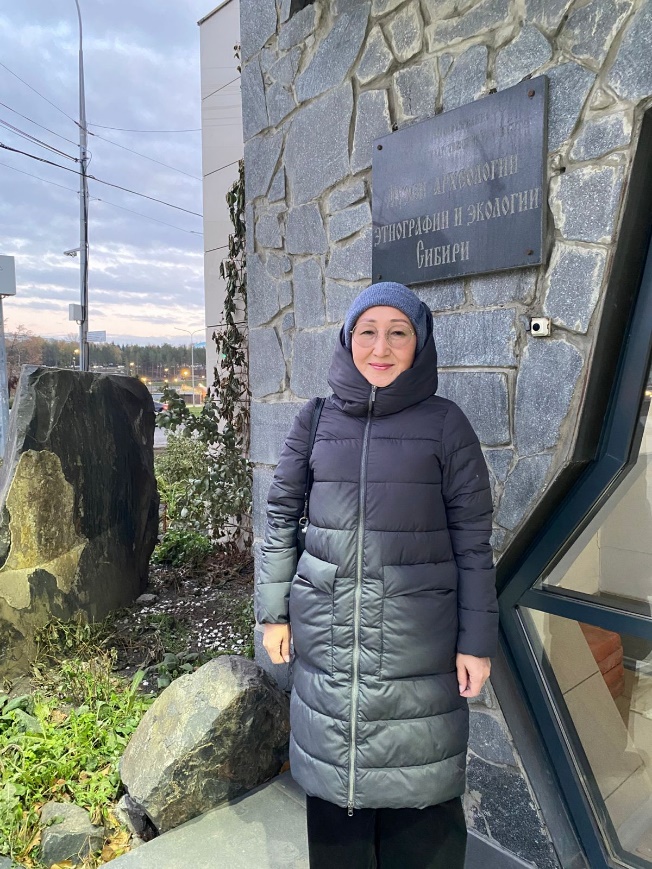
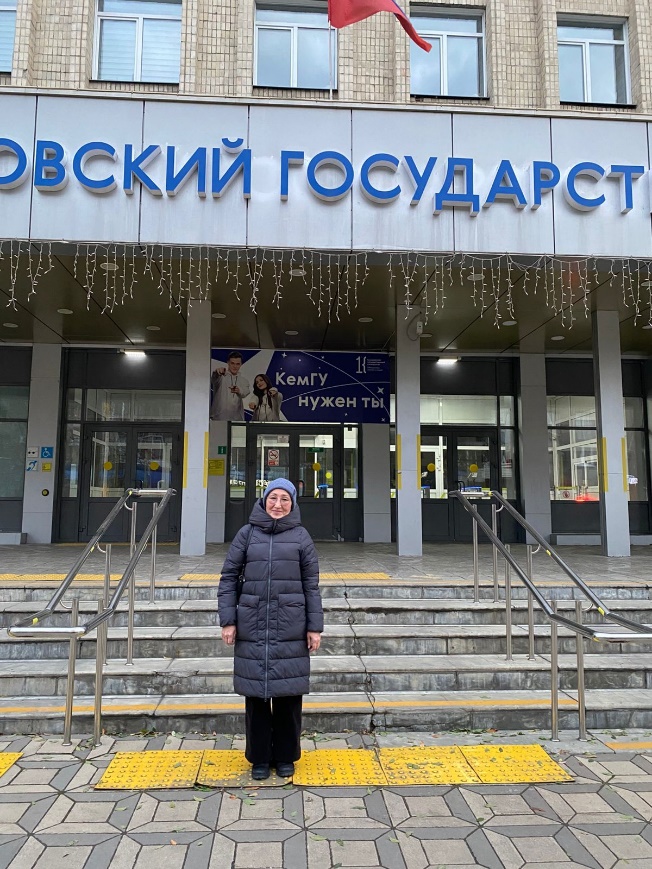
Visit to the Museum of Archaeology, Ethnology, and Ecology of Siberia at Kemerovo State University
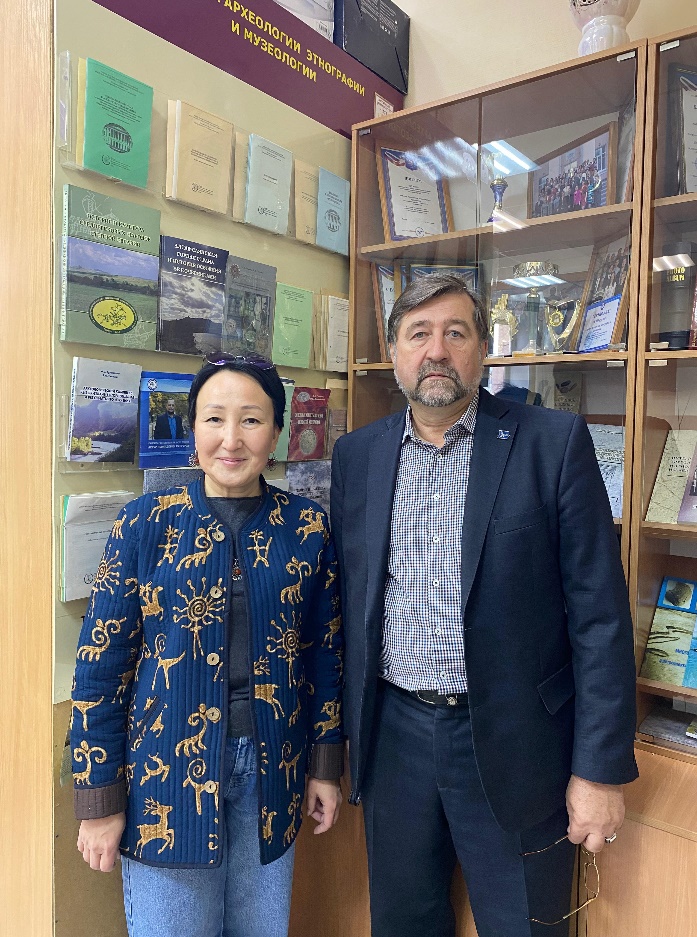
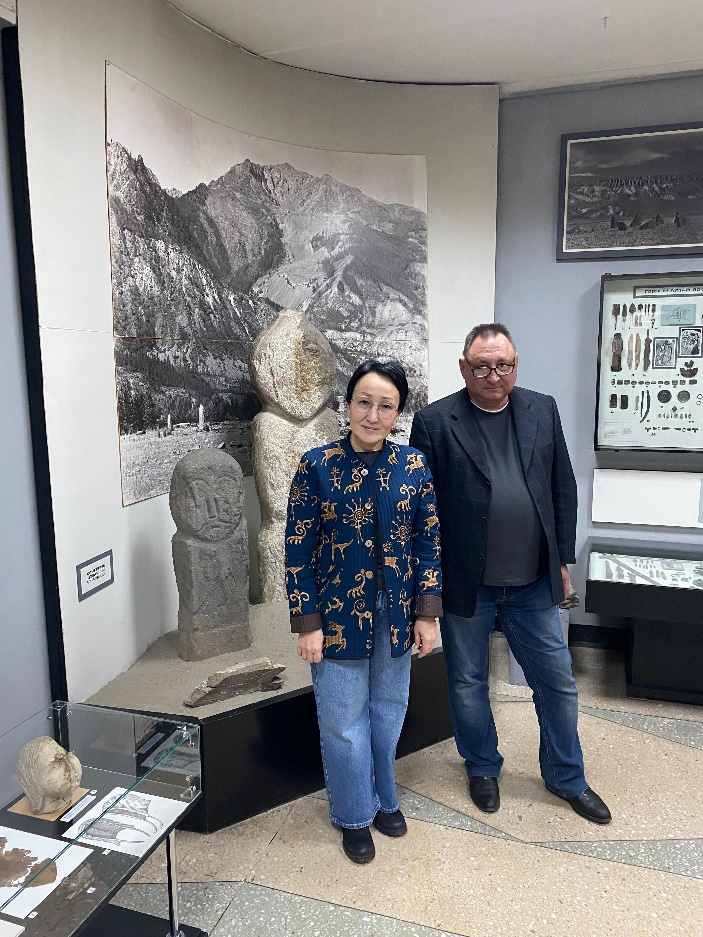
Moments of the meeting and consultation between Research Associate B.A. Sirazheva, Head of the Department of Archaeology of Altai State University A.A. Tishkin, and Director of the Museum of Archaeology and Ethnography of Altai Y.V. Frolov, Barnaul
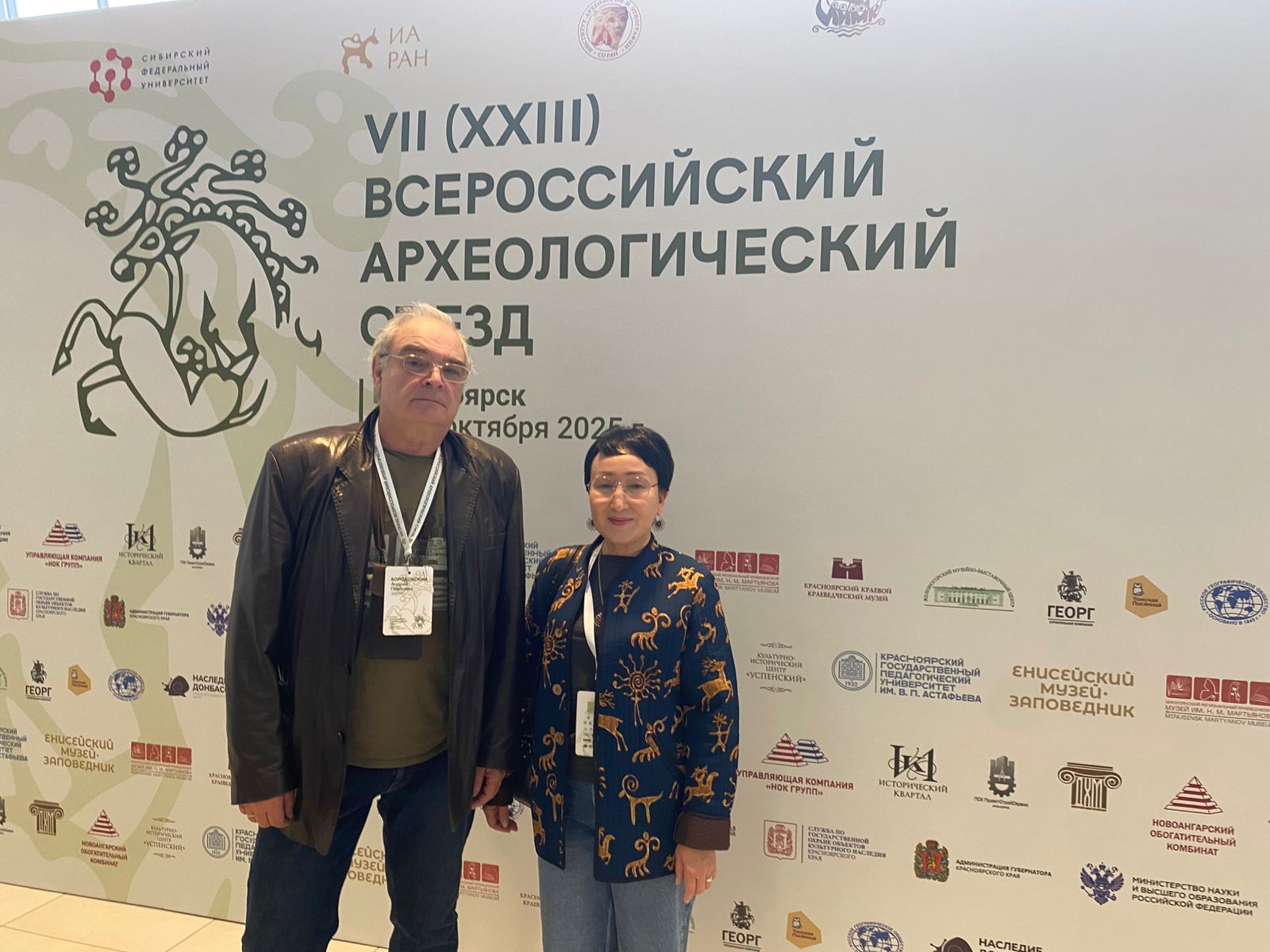
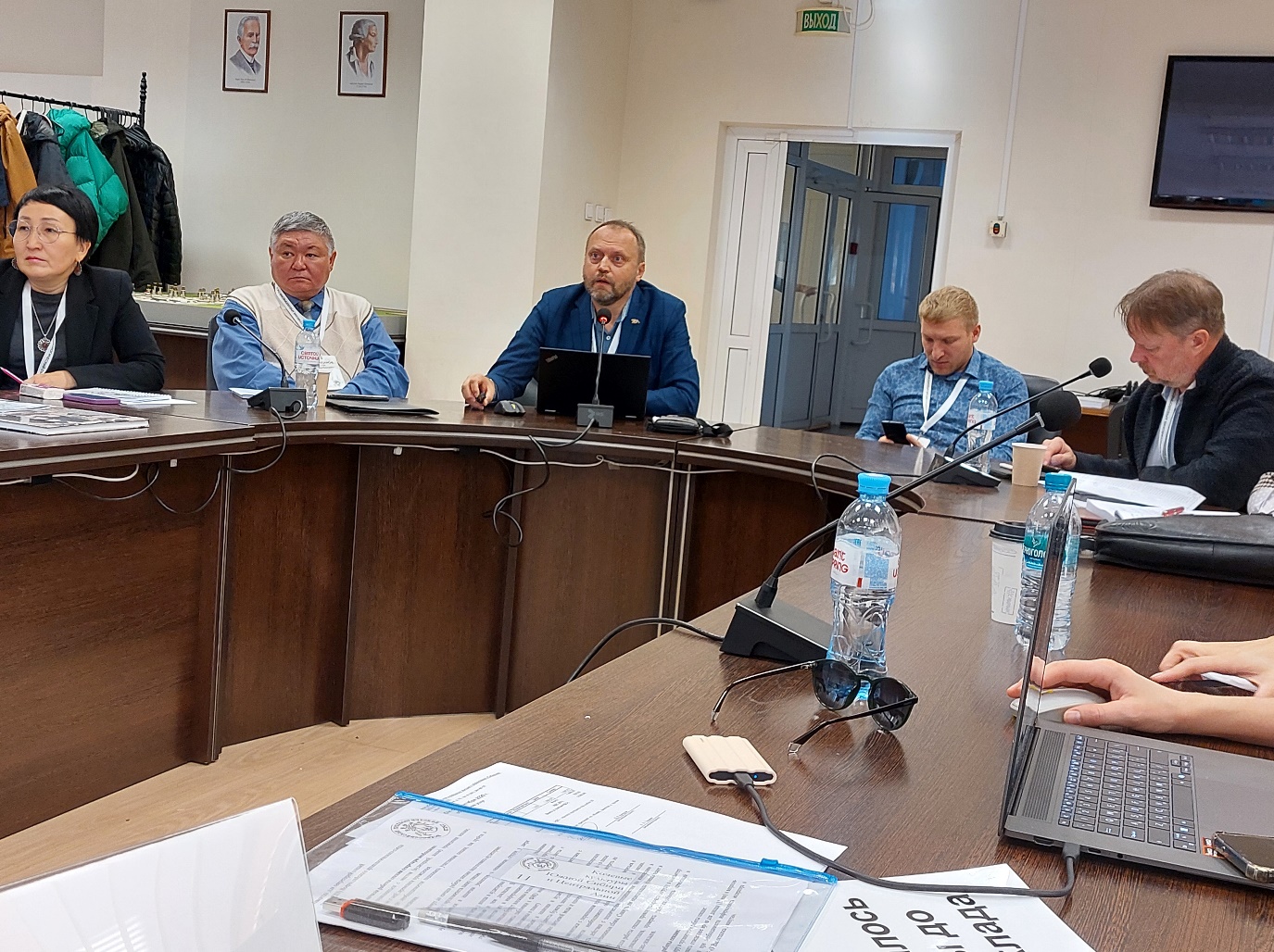
At the VII All-Russian Archaeological Congress, Krasnoyarsk