



Event Calendar
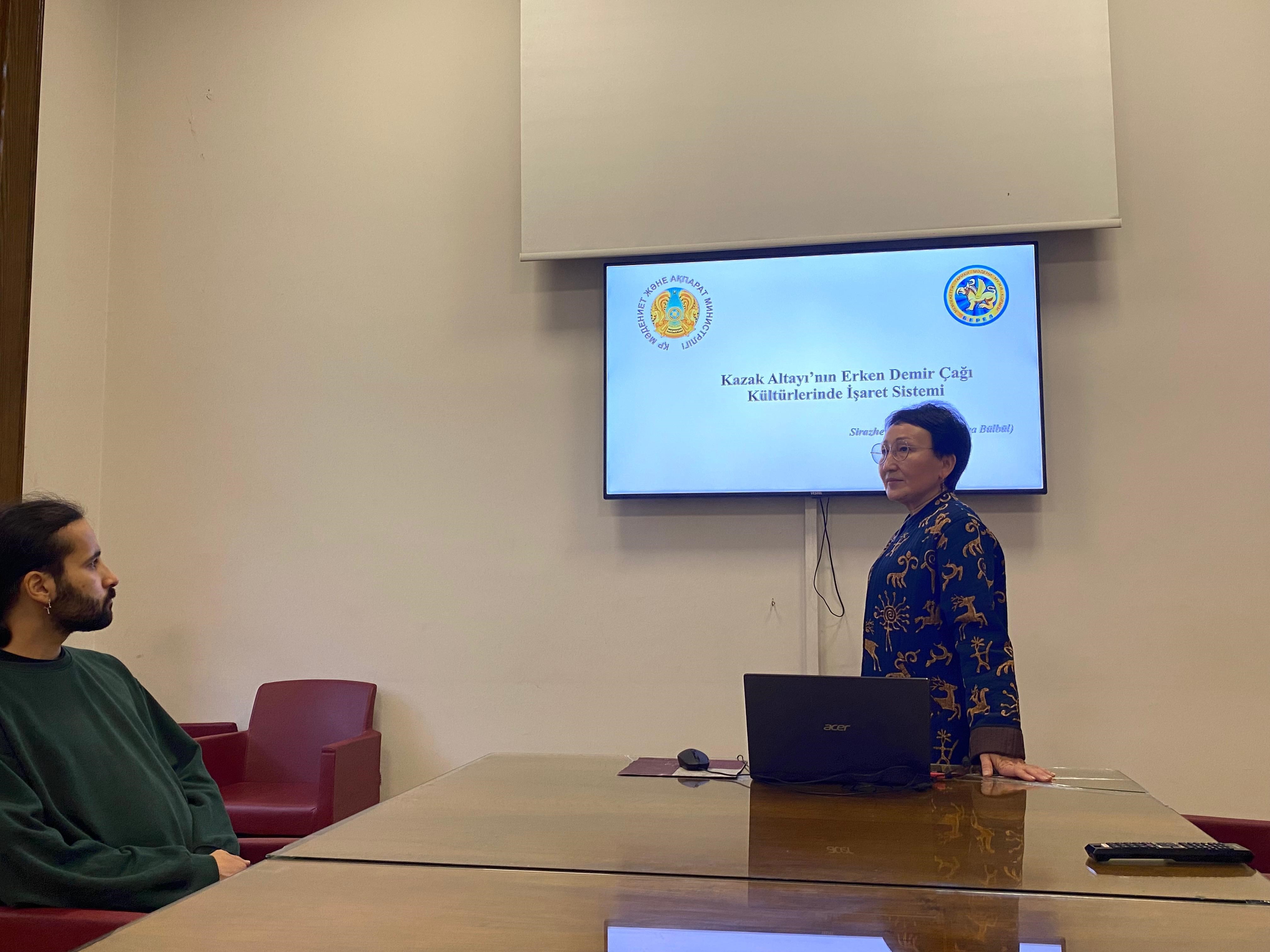
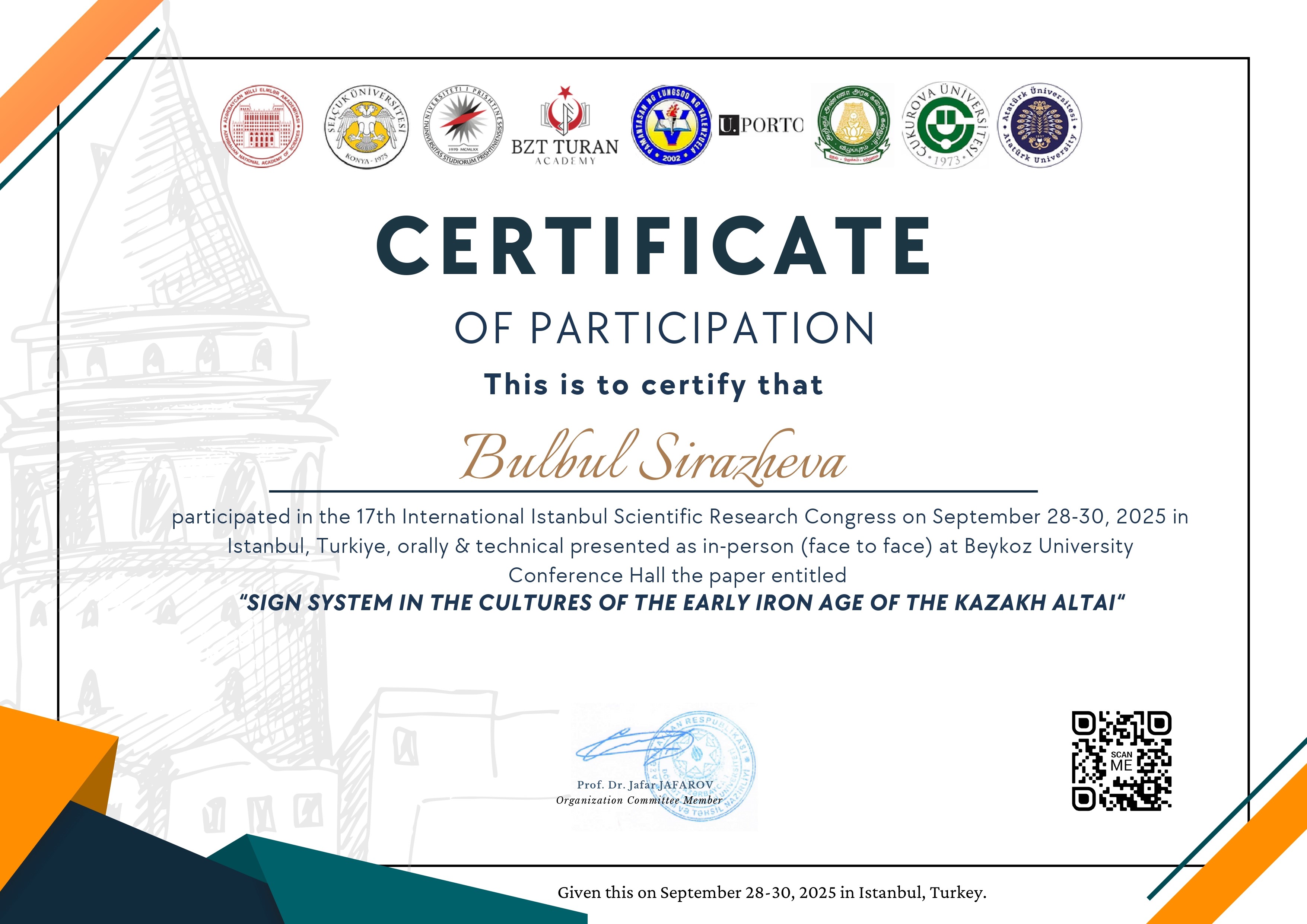
In Istanbul, within the framework of the 17th International Istanbul Scientific Studies Congress, a presentation was delivered on the topic “ Sign system in the cultures of the Early Iron Age of the Kazakh Altai.”
The report highlighted the distinctive features of the sign system found on Early Iron Age archaeological sites in the Kazakh Altai, as well as the methods and results of its study from archaeological and semiotic perspectives. The main objective of the research program is to conduct a comprehensive analysis of the sign system of the ancient nomads and to interpret it as an integral component of the cultural heritage of the Central Eurasian region.
In recent years, the Presidents of Turkey and Kazakhstan have attached particular importance to strengthening cooperation in the fields of history, culture, and science. The exchange of information on ongoing scientific projects contributes to the deepening of cultural and academic ties between the two countries.
The ancient history of the Altai region, rightfully regarded as the “Golden Cradle of the Turkic World,” represents a shared historical and cultural heritage of the entire Turkic community. From this perspective, the presented report is significant not only as an international validation of the research program’s results, but also as a contribution to the development of scientific and cultural cooperation between Kazakhstan and Turkey.
https://berel-museum.kz/en/kontakty/137-event-calendar.html#sigProId037d569833
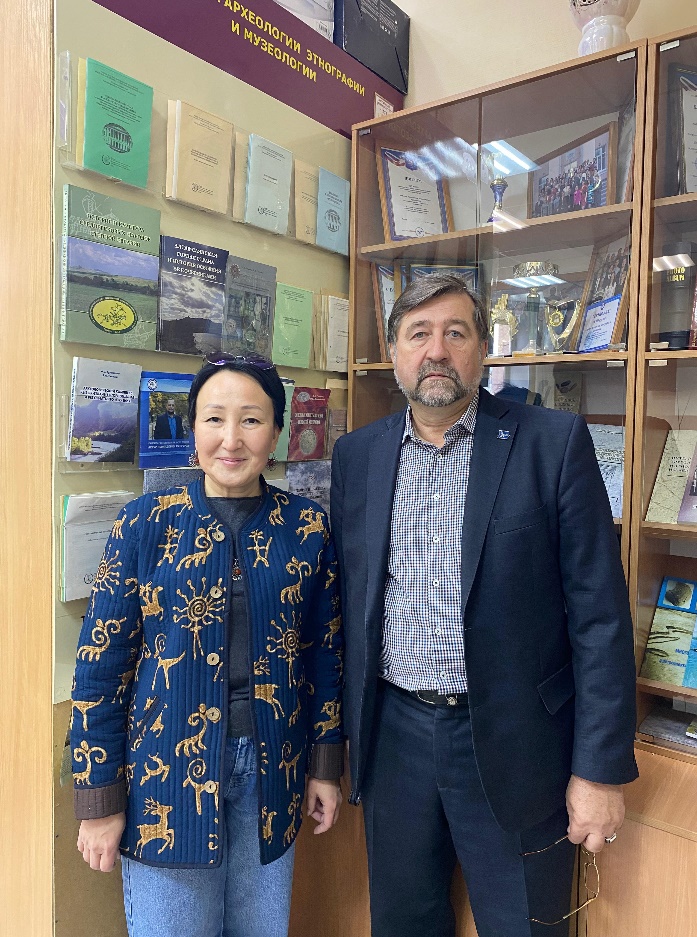
During the visit, meetings were held with professors from the Department of Archaeology at Kemerovo State University, as well as with specialists from the Museum of Archaeology, Ethnology, and Ecology of Siberia at Kemerovo State University – leading archaeologists of the Kemerovo region.
The museum’s scientific archive contains more than 900 volumes, including reports of archaeological expeditions conducted by the university’s staff since the 1960s, drawings and photographs of archaeological sites, monument passports, archaeologists’ field diaries, minutes of departmental meetings, and other materials.
As it was impossible to review the entire archive during the trip, materials from Kemerovo State University’s petroglyphic expeditions of various years were selected for analysis. These materials reflect the results of field research carried out in the regions of the Sayan-Altai, Central Asia, and the Northern Tien Shan.
The museum’s scientific archive has accumulated a unique corpus of data on petroglyphs from these regions. These collections make it possible to trace regional features of artistic techniques and iconography and to identify common characteristics of the worldview and symbolic thinking of ancient communities. The obtained information is of particular scientific value for comparative analysis with the petroglyph complexes of Eastern Kazakhstan.
The business trip continued in Barnaul, at the Department of Archaeology and the Museum of Archaeology and Ethnography of Altai State University, where working meetings were held with the department and museum staff.
It should be noted that the museum’s collection contains significant materials on the ancient and medieval history of the Altai region. During the work, the presence of archaeological complexes with tamga-like elements – stone enclosures, burial structures, groups of petroglyphs, and individual artifacts bearing sign images – was confirmed within the territory of the Altai Republic and adjacent regions. These materials are especially important for comparative analysis with finds from the Kazakh Altai in studying the continuity of the sign-communicative traditions of ancient nomads. As a result of the trip, new scientific materials were collected, and archives and collections of interest for further research on the sign systems of ancient nomads were identified. In addition, an agreement was reached to continue cooperation with Russian research centers in the exchange of field data, scholarly publications, and methodological developments.
The business trip coincided with the VII All-Russian Archaeological Congress in Krasnoyarsk, participation in which made it possible to present a research paper, discuss the results on a broad academic platform, and establish new professional contacts for further scholarly collaboration.
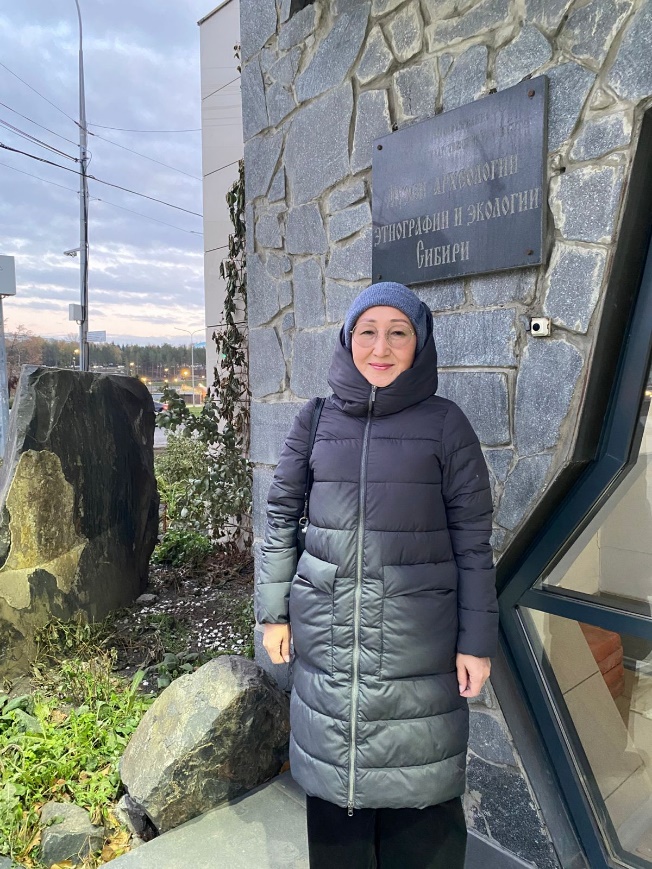
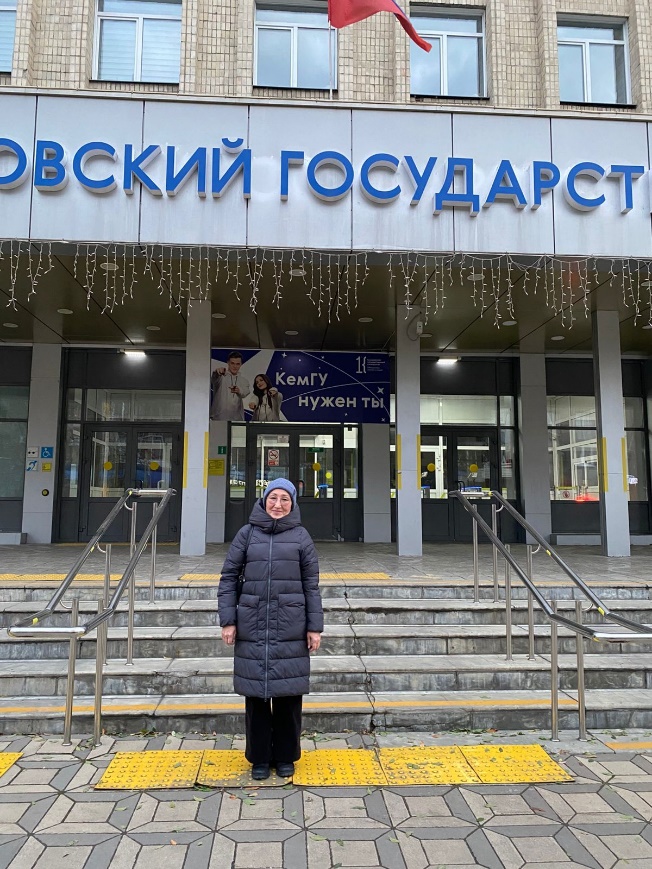
Visit to the Museum of Archaeology, Ethnology, and Ecology of Siberia at Kemerovo State University
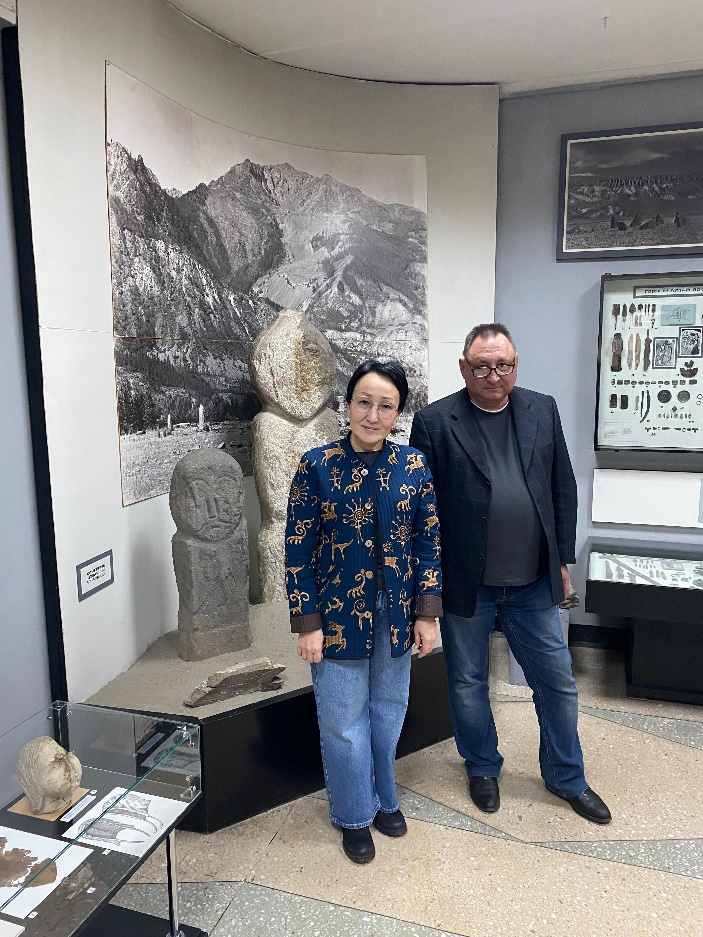
Moments of the meeting and consultation between Research Associate B.A. Sirazheva, Head of the Department of Archaeology of Altai State University A.A. Tishkin, and Director of the Museum of Archaeology and Ethnography of Altai Y.V. Frolov, Barnaul
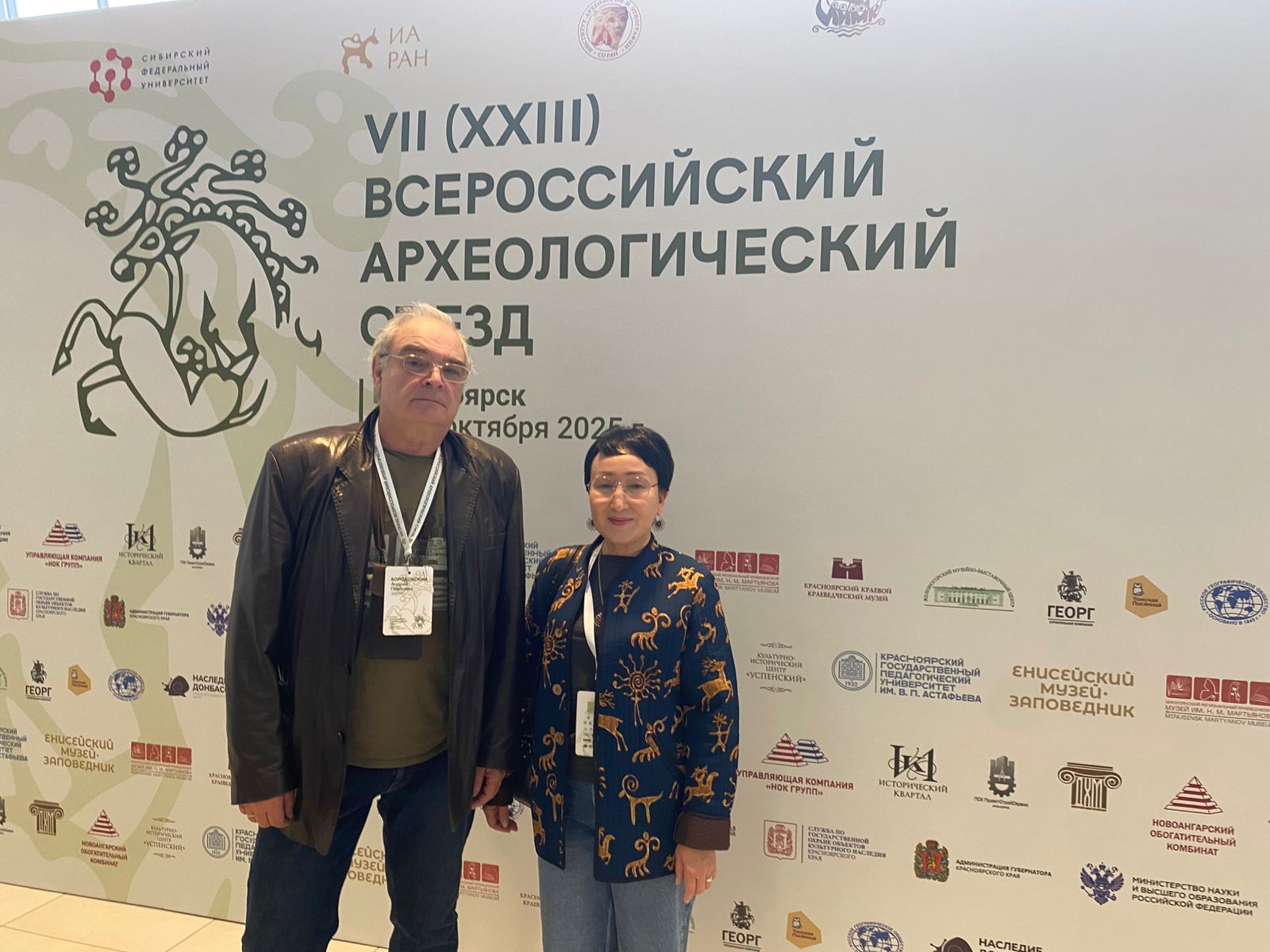
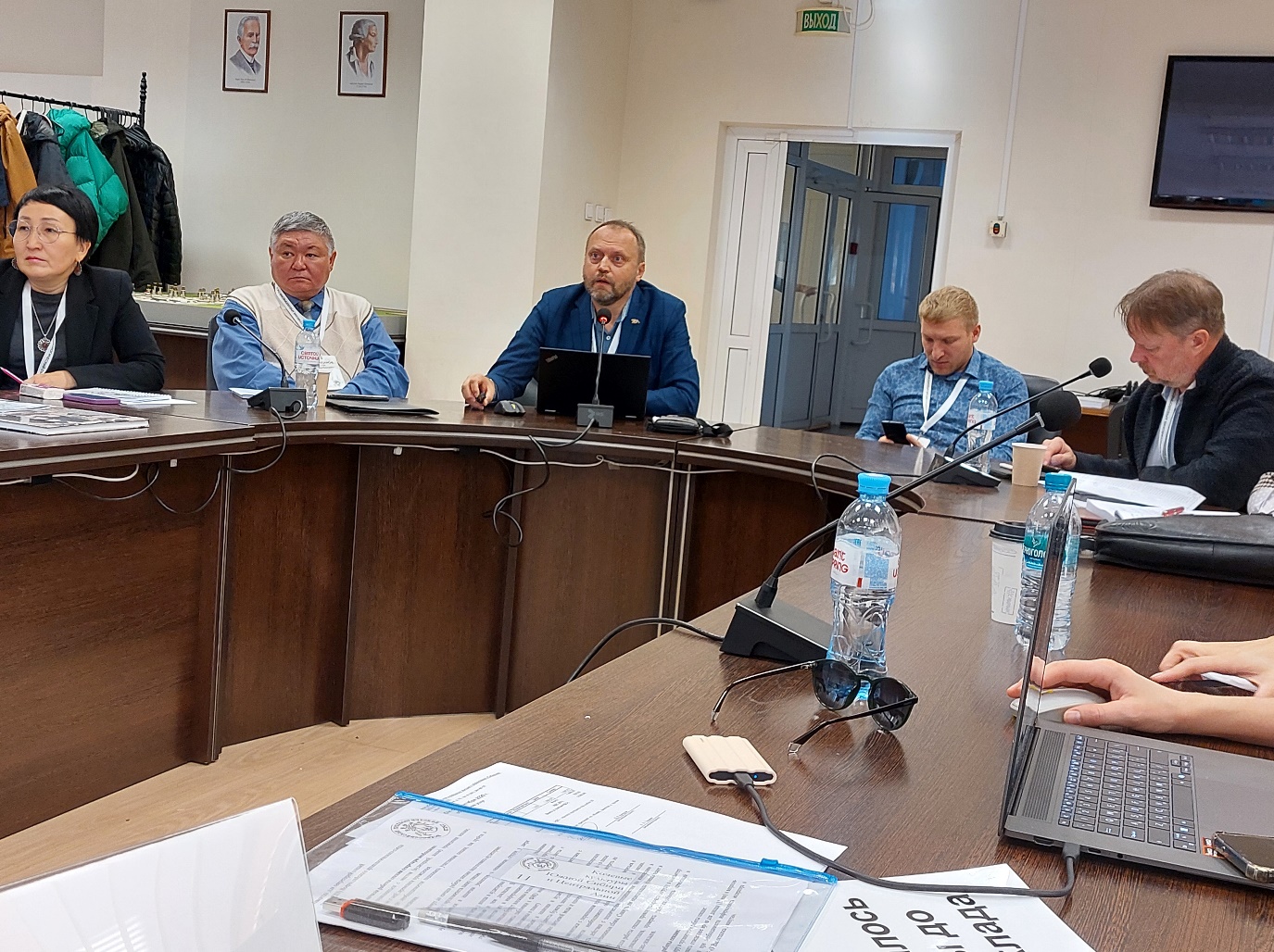
At the VII All-Russian Archaeological Congress, Krasnoyarsk
Within the framework of the grant-funded scientific project AP23486716 – “The Sign System and Tamgas of the Kazakhs of the Altai”, the working group of the State Historical and Cultural Museum-Reserve Berel is conducting a large-scale ethno-archaeological expedition aimed at collecting and studying the tamga signs of the Kazakhs of the Altai.
The research encompasses the Ulan, Tarbagatai, Katon-Karagai, Kurshim, and Markakol districts of the East Kazakhstan Region, as well as the Kosh-Agach district of the Russian Federation (the photographs from Kosh-Agach were taken by journalist Merey Kainar).
The outcomes of the expedition will be presented in scientific reports and will also be widely disseminated through mass media and social networks.
Project Leader: PhD, archaeologist Samat Kairolyevich Samashev.


https://berel-museum.kz/en/kontakty/137-event-calendar.html#sigProId2db3001855
Within the framework of the scientific program “BR22082478 – The Sign System in the Cultures of the Early Iron Age of the Kazakh Altai,” the research team of the State Historical and Cultural Museum-Reserve “Berel” is conducting fieldwork aimed at documenting symbolic signs and tamgas of the ancient nomads of the Kazakh Altai.
The research covers the Ulan, Tarbagatai, Katon-Karagai, and Kurchum districts of the East Kazakhstan Region.
The results of the expedition will be presented in scientific reports and will also be widely disseminated through the mass media and social networks.
Project Leader: PhD, archaeologist Samat Kairollauly Samashev.


https://berel-museum.kz/en/kontakty/137-event-calendar.html#sigProId6dfb7460db
Within the framework of the grant-funded scientific project AP23486716 – “The Sign System and Tamgas of the Kazakhs of Altai,” implemented with the support of the Ministry of Science and Higher Education of the Republic of Kazakhstan, Acting Director of the State Historical and Cultural Museum-Reserve “Berel” Mr. Almas Sarbasov and Research Fellow Ms. Bulbul Sirazheva undertook a working visit to Bayan-Ölgii aimag of Mongolia from 9 to 14 August of the current year.
The primary purpose of the mission was to conclude an agreement on the collection of materials related to tamgas characteristic of the Kazakhs of the region.
During the visit, meetings were held with the Governor of the aimag, Mr. Zangar Yesentaiuly, and the Director of the Bayan-Ölgii Museum, Ms. Aishagul Azamatkyzy. As a result of the negotiations, the draft agreement was finalized and submitted for official approval to the relevant state authorities of Mongolia.
Furthermore, in accordance with the project’s calendar plan for 2026, consultations were conducted in preparation for the forthcoming ethno-archaeological expedition with the Director of the Department for the Protection of the Altai Rock Art Complex of Mongolia, PhD Mr. Omirbek Bikumaruly, as well as with a Researcher of the Institute of History and Ethnology of the Academy of Sciences of Mongolia, tamga specialist PhD Mr. Shynarbek Seitkhanuly. The discussions focused on the proposed timeframe of the expedition, its main objectives, and the prospects for further joint research.

Official meeting with the Governor of Bayan-Ölgii aimag, Mr. Zangar Yesentaiuly

Official meeting with Ms. Aishagul Azamatkyzy, Director of the Bayan-Ölgii Museum

Official meeting with PhD Mr. Omirbek Bikumaruly, Director of the Department for the Protection of the Altai Rock Art Complex of Mongolia

Meeting with PhD Mr. Shynarbek Seitkhanuly, Research Fellow of the Institute of History and Ethnology of the Academy of Sciences of Mongolia, tamga specialist

Partner Institution – Bayan-Ölgii Aimag Museum
Who's Online
We have 55 guests and no members online